If you have heard Botox mentioned for both forehead lines and chronic migraines, you may be wondering how the two uses are connected. They share the same neurotoxin, but the goals, injection patterns, and dosing look quite different.
This article is for anyone curious about Botox for migraines, cosmetic Botox, or both. We will walk through how each treatment works, who tends to be a good candidate, and what the experience looks like at Laser Center of Marin in Corte Madera.
Botox is a purified form of botulinum toxin type A. When injected into specific muscles, it temporarily blocks the nerve signals that tell those muscles to contract. That single mechanism explains both applications, even though the end goals are different.
For cosmetic Botox, the softened muscle activity smooths the dynamic wrinkles that form from repeated facial expressions. For Botox for migraines, the same signal blocking may help reduce the frequency of migraine days for people with chronic migraine. The FDA approved Botox for chronic migraine in 2010, defined as 15 or more headache days per month.
In short:
Cosmetic Botox targets the small muscles responsible for dynamic expression lines, the creases that appear when you frown, squint, raise your brows, or scrunch your nose. By temporarily relaxing these muscles, Botox allows the skin above them to smooth out, which softens existing lines and helps prevent deeper etching from forming over time.
Many patients start with three common cosmetic treatment areas:
The goal is a refreshed, natural look rather than a frozen one. Most appointments take 15 to 20 minutes. Most patients begin to notice softening within three to five days, with full results visible around 10 to 14 days after treatment.
Effects typically last about three to four months, after which many patients return for maintenance. If results feel uneven or less pronounced than expected after a full two weeks, a touch-up appointment can be scheduled.
Botox for migraines is a preventive medical treatment, meaning it is used to help reduce the frequency and severity of migraines before they start, rather than stopping a headache already in progress.
It is FDA-approved specifically for adults diagnosed with chronic migraine, defined as 15 or more headache days per month, with at least eight of those days having migraine-specific features such as throbbing pain, nausea, or sensitivity to light and sound.
Unlike cosmetic Botox, which targets a few small facial muscles, migraine Botox involves approximately 31 injections across seven specific areas of the head, neck, and shoulders, following a protocol developed through clinical research.
Most patients begin to notice fewer migraine days within four to six weeks of their first treatment, and sessions are typically repeated every 12 weeks to maintain results.
The treatment protocol differs from a cosmetic appointment in several ways:
Because this is a medical indication, it is typically prescribed and managed by a neurologist or headache specialist, and often requires documentation of chronic migraine and prior preventive medications for insurance coverage.
As a physician-supervised aesthetic clinic serving Marin County since 2003, our team has earned the Black Diamond Award from Allergan for Botox and Juvederm, placing us among the top 100 practices nationwide for experience with these products.
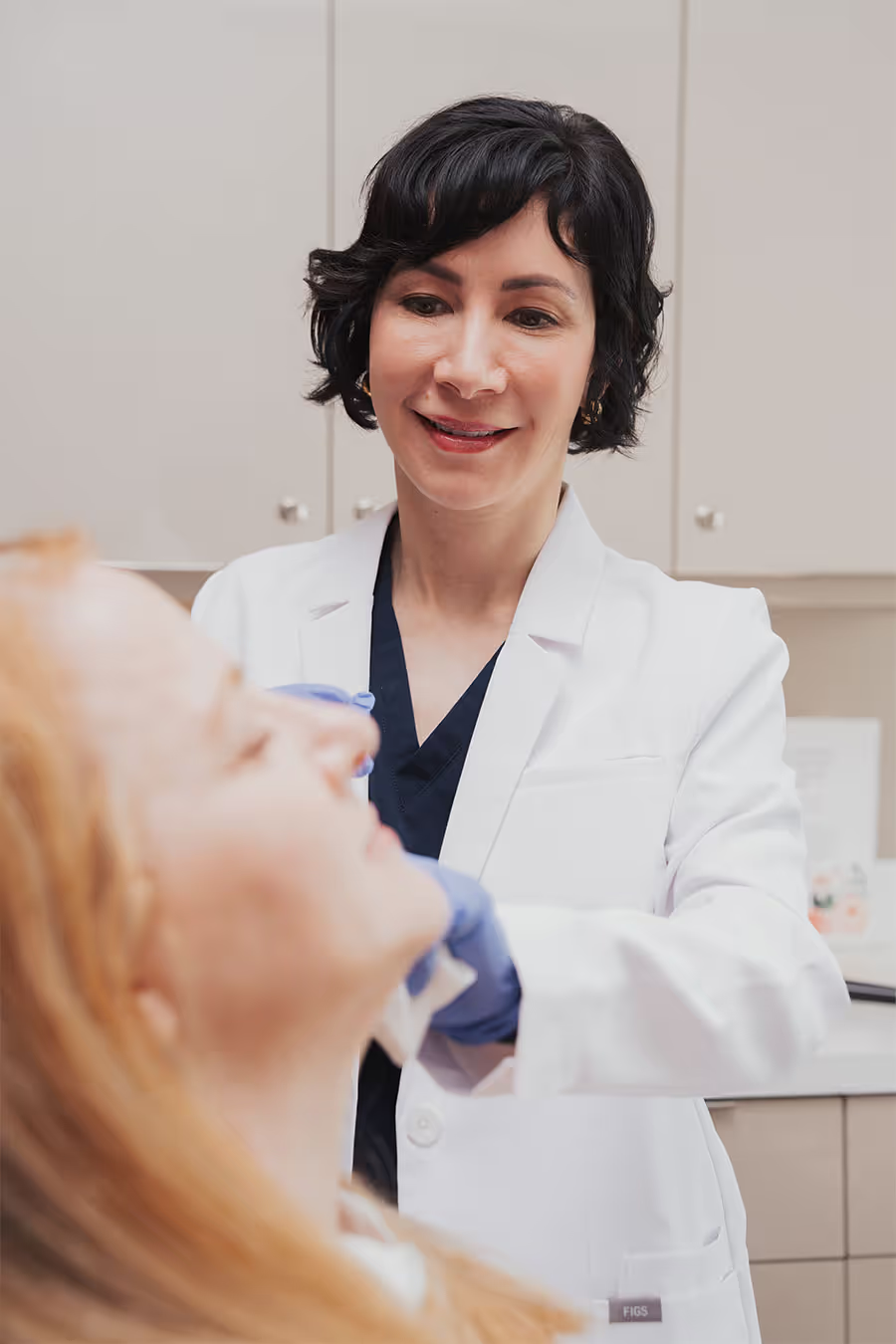
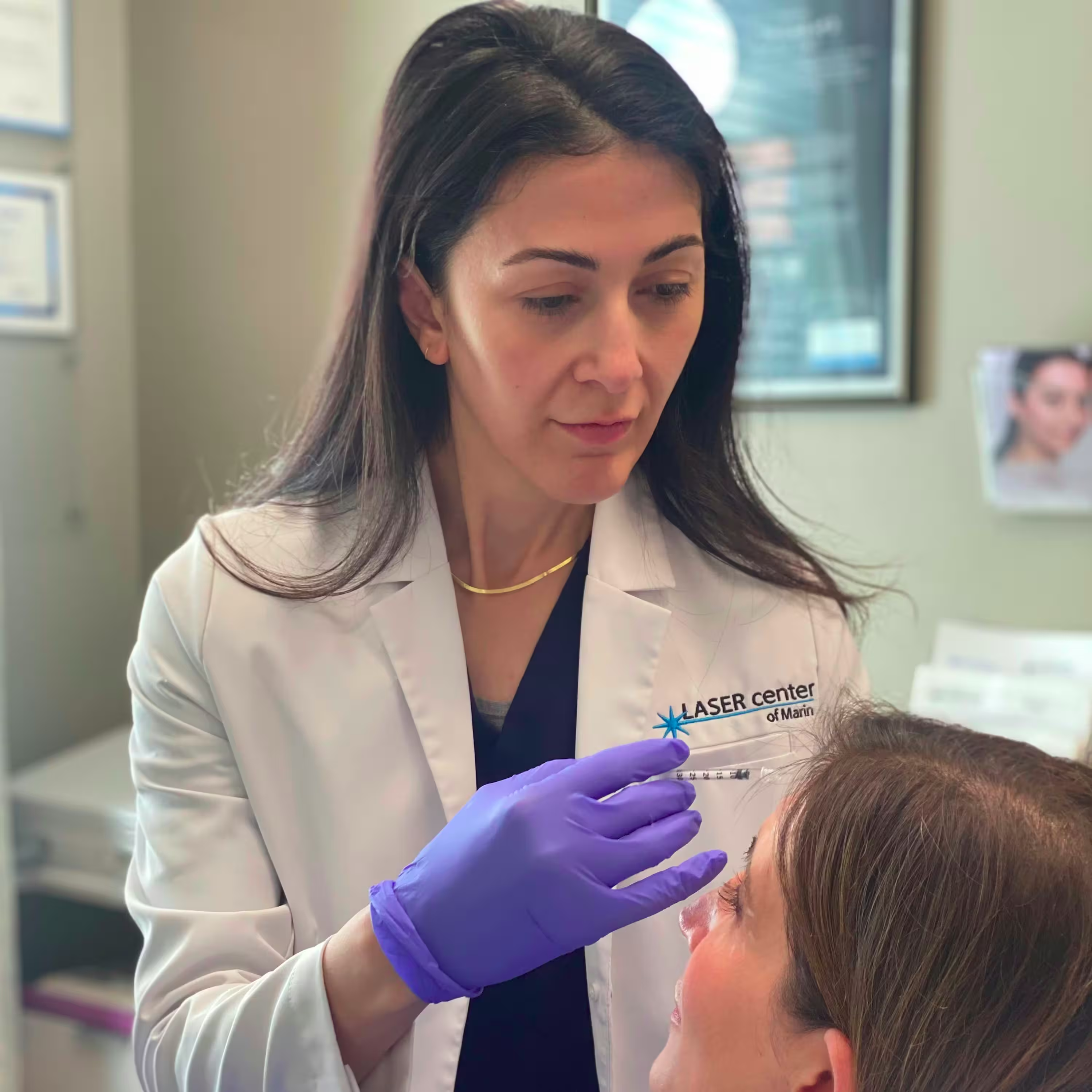
Every appointment starts with a conversation. We listen to your goals, review your medical history, and map out a plan that fits your face and your lifestyle. If cosmetic Botox is the right next step, you can expect:
Most patients return to their normal day immediately after a Botox appointment with no visible signs of treatment. We ask that you avoid heavy exercise, lying flat, facial massage, and facial treatments for approximately four hours after your appointment to prevent the product from migrating to unintended areas. Mild redness, small bumps at injection sites, or a pinpoint bruise can occur but typically fade within a few hours to a day.
If you are dealing with chronic migraines, we are happy to point you toward a qualified neurologist while helping you with any cosmetic goals on a separate track.
Yes, both treatments use the same product, onabotulinumtoxinA, manufactured by Allergan and branded as Botox. The key differences are in the dosing, the specific injection sites, and the treatment goals. Cosmetic Botox uses smaller doses placed in a few precise facial muscles, while the migraine protocol involves approximately 31 injections across seven areas at a higher total dose. The safety profile is well-established across both uses, with decades of clinical research supporting its FDA-approved applications.
Some patients may report fewer tension headaches after receiving cosmetic Botox in the forehead, glabella, or temple areas, as relaxing these muscles can reduce the muscular tension that contributes to everyday stress headaches. However, this is different from FDA-approved treatment for chronic migraine, which requires a specific clinical protocol, higher dosing, and a medical diagnosis. If chronic or frequent headaches are your primary concern, a neurologist is the right starting point for diagnosis and treatment planning.
Most patients return every three to four months to maintain their results as the neuromodulator gradually wears off and muscle movement returns. Some patients find that after 12 to 18 months of consistent treatment, they can stretch appointments slightly longer, as the treated muscles become somewhat less active over time. Your nurse practitioner will recommend a personalized cadence based on how your results settle and how you feel between appointments.
Cosmetic Botox pricing is typically based on the number of units used. The number of units needed varies based on the area, muscle strength, and desired results, with common treatment zones requiring anywhere from 10 to 40 units per area. Because cosmetic Botox is not covered by insurance, your provider will give you a clear, personalized estimate during your consultation after assessing your specific goals and the areas you wish to treat.
If you have been curious about Botox for cosmetic reasons, migraine relief, or both, the clearest path forward is a conversation with an experienced injector. Our team at Laser Center of Marin will listen to your goals and help you understand what is realistic for your face and your lifestyle. Book your consultation online or call us at (415) 945-9314.