The mid-face is often the first area to show the quiet signs of aging. Cheeks that once looked soft and full can begin to flatten, hollows may appear beneath the eyes, and the jawline can start to lose its lift. For many patients in their late thirties through their sixties, this gradual loss of volume changes the whole balance of the face, even when the skin itself still looks healthy.
Cheek fillers offer a thoughtful, non-surgical way to restore that structure. This guide is for anyone who has noticed a flatter mid-face in photos, feels their makeup no longer sits the same way, or is simply curious about how modern injectables can refresh the cheeks without changing who they are.
The cheeks are supported by a complex layered system of fat pads, facial bone, collagen-rich connective tissue, and the muscles that control expression. Over time, each of these layers shifts, thins, or diminishes in ways that change the way light falls across the face and how youthful the mid-face appears.
This process typically begins in the mid-30s and accelerates gradually into the 50s and beyond, though genetics, sun exposure, weight fluctuations, and lifestyle factors all influence the pace.
Understanding what is actually happening beneath the skin helps explain why topical products alone cannot restore lost cheek volume, and why treatments that address the deeper structure tend to produce the most natural-looking results.
The main reasons the mid-face loses volume with age:
The result can look like tired under-eyes, deeper smile lines, or a subtle downward pull through the lower face. Many patients describe it as looking drawn, even when they feel well rested. Rebuilding volume in the cheek area can help lift and support the surrounding tissues, which is why cheek filler is often a foundational treatment rather than a purely cosmetic one.
Cheek fillers are injectable gels, most often made from hyaluronic acid, a substance the body already produces. A trained injector places small amounts of product along the cheekbone, the apple of the cheek, and sometimes the mid-cheek hollow to recreate youthful contours.
At Laser Center of Marin, our providers select from a range of FDA-approved products based on your anatomy, your goals, and the quality of your skin.
Commonly used options include:
You can explore our full menu of injectable treatments to see how cheek fillers can fit alongside other options such as Botox or lip fillers.
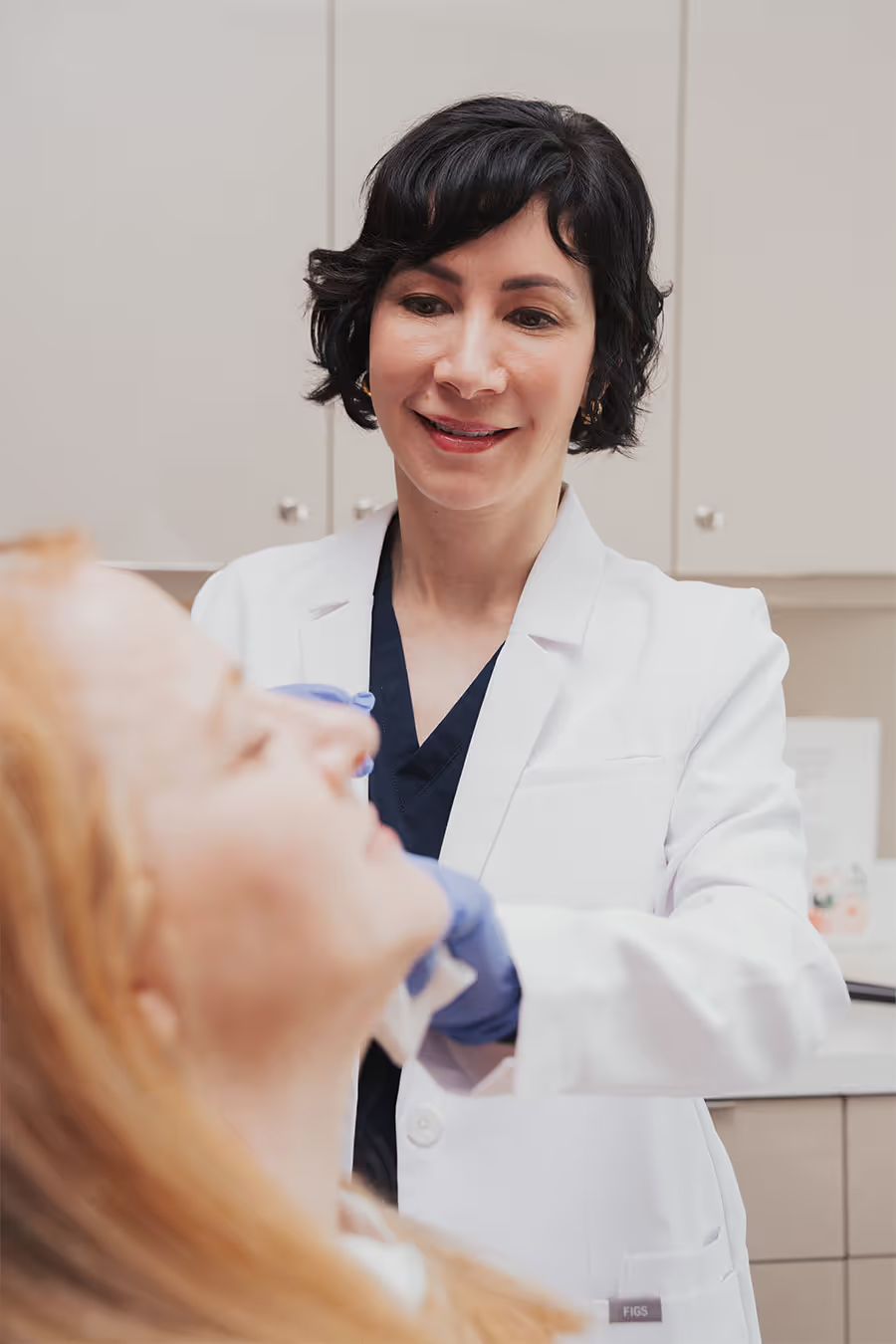
A typical cheek filler visit usually takes less than an hour from start to finish. Most of that time is spent on careful assessment and planning rather than on the injections themselves. Patients can generally return to work or normal activities directly afterward.
Here is what a typical cheek filler appointment looks like:
When placed conservatively by an experienced injector, cheek fillers can look natural and are often undetectable to anyone who does not know you received treatment. The goal is always to enhance your own features rather than change them, which usually means using less product than patients initially expect. The overfilled look people sometimes worry about typically comes from too much product, poor placement, or repeated treatments without proper assessment in between.
Results are visible right away, though the final look settles over two to four weeks as any minor swelling resolves and the product fully integrates with your facial tissue. Final, fully settled results are typically visible at four weeks, which is why follow-up appointments are usually scheduled around the two to four week window rather than immediately after the initial treatment.
Depending on the product used and your individual metabolism, results typically last 12 to 24 months, with thicker, more structural fillers like Juvederm Voluma often lasting longer than softer, more hydrating formulations. Most patients schedule a touch-up appointment between 12 and 18 months to maintain their results.
The recovery period is short and generally very manageable. Common effects after your appointment include:
To protect your results, avoid strenuous exercise, alcohol, and heat exposure for about twenty-four hours. Sleeping slightly elevated on the first night can also help.
Cheek filler may suit many adults, but like any cosmetic treatment, it is not appropriate for everyone. The best candidates tend to be in good overall health, have realistic expectations, and are looking to enhance or restore their natural features rather than change their face entirely.
Cheek filler may be a good option for adults who want to:
The amount varies based on your anatomy, the degree of volume loss, and your goals. Many patients begin with one to two syringes per session. Those with more significant volume loss may benefit from two to four syringes spread across one to two sessions for gradual, natural-looking results.
Cheek filler is often paired with Botox for forehead lines or crow's feet, lip filler for overall facial balance, and skin treatments like DiamondGlow or chemical peels to improve skin quality alongside structural changes.
It may not be appropriate for patients who are pregnant or breastfeeding, have active skin infections in the treatment area, or have certain autoimmune conditions. A personalized consultation with one of our nurse practitioners is the best way to know.
Most hyaluronic acid cheek fillers last between 12 and 24 months, with products formulated specifically for the mid-face, like Juvederm Voluma XC and Restylane Lyft, typically sitting at the longer end of that range. Your individual metabolism, activity level, and the total amount of product placed all influence how long results last. Most patients schedule a touch-up between 12 and 18 months to maintain their results.
Most patients describe the experience as brief pressure or pinching rather than sharp pain. A topical numbing cream is applied before treatment, and most modern fillers contain lidocaine, which provides additional numbing as the product settles.
Downtime is minimal, and most patients return to work or normal activities immediately after their appointment. You may notice mild swelling, small bruises, or a firmer feel to the cheeks for a few days, which typically peaks at 24 to 48 hours before resolving. Most providers recommend avoiding intense workouts, alcohol, saunas, and blood-thinning supplements for 24 to 48 hours after your appointment.
Laser Center of Marin is a physician-supervised aesthetic clinic serving Marin County since 2003 and an Allergan Black Diamond practice, placing us among the top-100 providers of Juvederm and Botox in the country. Our team brings years of advanced injectable training, and we believe the best results come from listening first and injecting second.
If you are thinking about cheek fillers, we would love to meet you. Book your consultation online or call us at (415) 945-9314.