If you have tried facial after facial and your skin still looks the same a week later, the issue is probably not the products. Most facials that claim to be medical-grade are deeper versions of what any spa offers. They exfoliate more aggressively, use higher-concentration ingredients, and require a licensed professional.
The mechanism, however, stays the same: remove dead surface cells, then apply beneficial ingredients to the cleared skin. DiamondGlow is structured differently. Exfoliation, extraction, and serum delivery happen simultaneously through a single wand tip. That simultaneity changes what the treatment can accomplish.
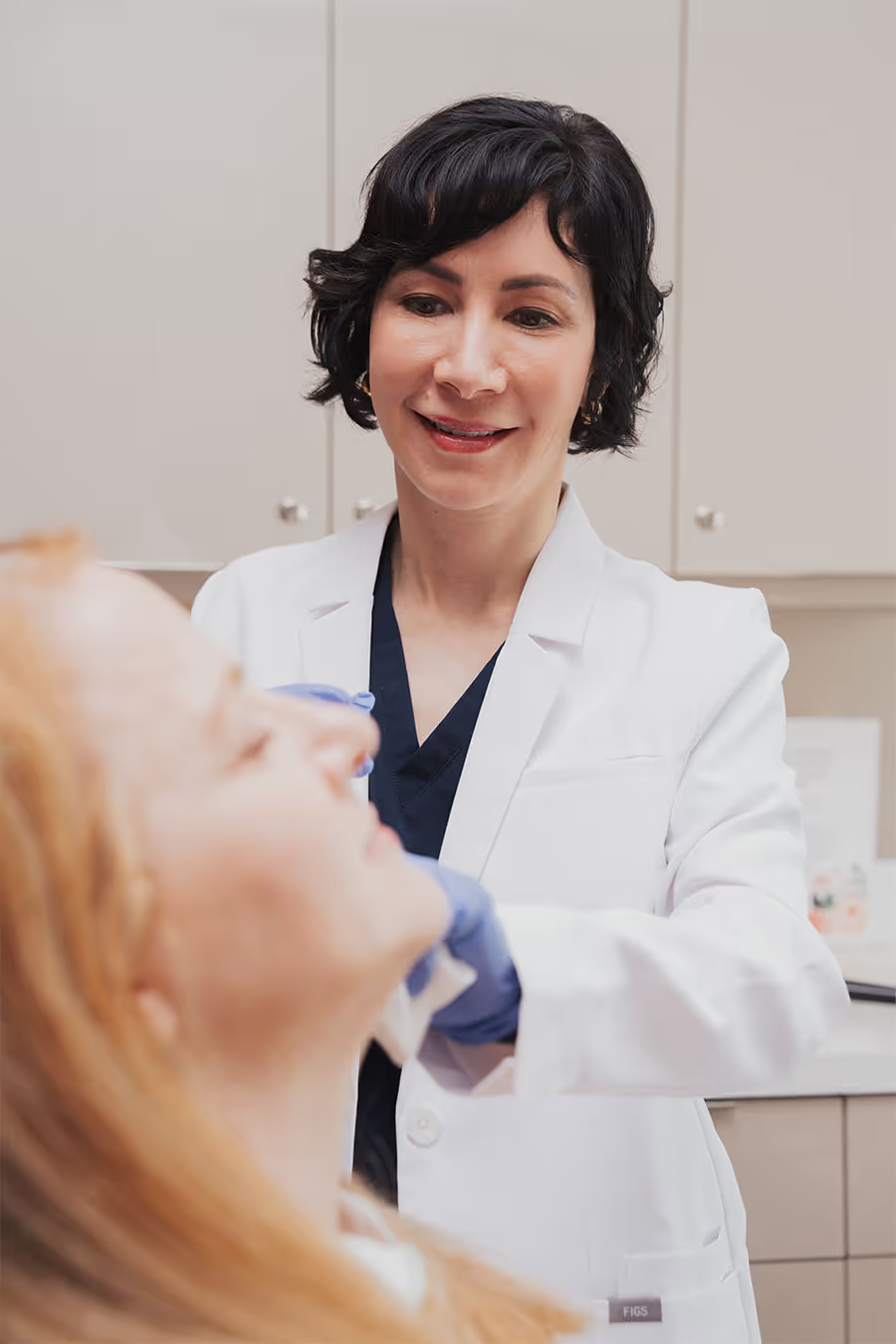
The Laser Center of Marin offers DiamondGlow as part of our physician-supervised facial treatment program, serving Marin County patients since 2003. Our providers perform DiamondGlow sessions and customize the serum selection to each patient's specific skin concerns on the treatment day.
DiamondGlow is a three-in-one system by SkinMedica that combines diamond-tip exfoliation, suction-based extraction, and serum infusion into a single simultaneous device pass.
A standard facial or chemical exfoliation works sequentially: remove dead surface cells first, then apply actives to the cleared skin.
The limitation is timing. By the time the provider applies the serum, the skin surface has begun to close. The stratum corneum (the outermost dead-cell layer of the skin) starts to rebuild almost immediately after mechanical disruption. The channels that opened during exfoliation are no longer maximally open when the serum arrives.
DiamondGlow collapses that sequence. The diamond-tipped wand abrades the stratum corneum while simultaneously suction clears debris and sebum (the skin's natural oil) from the pores. As the surface is being cleared, the device delivers the selected SkinMedica serum through the channels while they are at their most open. The result is deeper serum penetration than sequential treatment delivers.
DiamondGlow addresses congestion, dehydration, dullness, mild hyperpigmentation, and surface texture irregularity.
Congestion and enlarged pores. The suction-based extraction component clears clogged pores and blackheads without the manual pressure of traditional extraction. The simultaneous wand movement prevents the skin from clenching around the pore during extraction. This reduces the residual redness that manual extraction typically produces.
Dehydration and dullness. The diamond-tip removes the dead cell layer that diffuses and flattens light reflection. Hydrating SkinMedica serums are delivered into freshly opened channels, reaching below the surface rather than pooling on top of the stratum corneum.
Mild hyperpigmentation. Brightening serum formulations target uneven tone from photodamage or post-acne marks. See our hyperpigmentation concern page for more context on how we approach this.
Surface texture. The exfoliation component smooths the irregular surface created by dead cell accumulation, congestion, and mild dry-skin buildup.
A DiamondGlow facial is not a treatment for structural acne scars. For patients whose primary concern is scar depth, Micropen microneedling or dermaplaning may be more appropriate starting points.
A 2024 prospective clinical study by Huang et al., published in the Journal of Cosmetic Dermatology by researchers at Allergan Aesthetics, found that a single DiamondGlow session combined with SkinMedica's TNS Advanced+ serum produced statistically significant improvements in fine lines, skin smoothness, radiance, and hydration after just one treatment (all p ≤ 0.004).
After six biweekly sessions, all investigator-assessed skin quality parameters showed significant improvement versus baseline, with 100% of subjects satisfied at 12 weeks. This is an industry-sponsored study; individual outcomes vary by skin type and concern.
A DiamondGlow session at Laser Center of Marin takes approximately 30 to 45 minutes and requires no downtime.
The provider selects the appropriate diamond-tip grit level, and the SkinMedica serum formulation is matched to the patient's concerns. The wand passes across the treatment area systematically. Suction, exfoliation, and infusion run simultaneously throughout each pass.
Patients commonly describe the sensation as a firm, warm vacuum pressure. The device does not cause discomfort. No numbing cream is required.
Skin tone is typically brighter and smoother immediately after the session. Most patients return to normal activity the same day.
DiamondGlow is suitable for a wide range of skin types, but several conditions require postponing or modifying treatment.
DiamondGlow requires minimal aftercare. During the first 24 hours, the cleared skin surface is most permeable and most susceptible to both beneficial and irritating inputs.
Most patients begin with a series of three to four sessions spaced two to four weeks apart and notice the improvement compounding with each one. From there, a monthly maintenance schedule sustains the results between more intensive treatments.
Yes, particularly for the congestion and oil buildup component of acne. The extraction mechanism clears clogged pores without manual pressure. For patients with active breakouts, treatment timing is assessed at each appointment. See our acne concern page for context on how DiamondGlow fits into broader acne management.
DiamondGlow is one of the more well-tolerated professional treatments for sensitive skin, and patients who have reacted to acids or enzyme peels often find it a comfortable alternative. The diamond tip grit level is adjustable, and the absence of chemical actives during the procedure means there is no acid or enzyme to trigger a reactive response. Our providers adjust tip strength for sensitive skin patients and assess skin reactivity at every session.
Dermaplaning uses a surgical blade to remove the stratum corneum and fine vellus hair. DiamondGlow uses diamond-tip abrasion and adds suction-based extraction and serum infusion. Dermaplaning does not include extraction or infusion. DiamondGlow does not remove vellus hair. Both can be performed in the same visit for patients who want the benefits of both.
The SkinMedica serum selection is matched to each patient's specific concern at the appointment. Options include hydration-focused formulations, brightening serums for hyperpigmentation, and pore-refining serums for congestion. Our providers select the serum based on the skin's condition and the primary concern on the treatment day.
If your skin consistently looks dull, feels congested, or responds poorly to your current routine, a DiamondGlow consultation is the right starting point. The Laser Center of Marin has served Marin County as a physician-supervised med spa since 2003. Our full skincare team assesses every patient's skin on the treatment day and builds the session around what they find.
Explore our full treatment menu for more options. Visit us at 770 Tamalpais Drive, Suite 301, Corte Madera, CA 94925, book online, or call (415) 945-9314 to schedule.
Medical Disclaimer: Consultation required. Individual results may vary based on skin type, current condition, serum selection, and aftercare compliance. Clinical data cited is from an industry-sponsored, peer-reviewed study and reflects a specific treatment protocol combined with SkinMedica serum. DiamondGlow is contraindicated during active rosacea flares, active acne breakouts, open wounds, and within the recovery window of recent ablative procedures.