Hollowing around the lower face and jawline is one of the more common changes patients bring up after losing weight quickly, including weight loss associated with GLP-1 medications like Ozempic and Wegovy.
The term "Ozempic face" has become shorthand for this pattern, but the underlying change isn't specific to any one medication. It's what happens to facial fat when the body loses volume faster than the skin can adjust.
This isn't a piece about the medications themselves. Laser Center of Marin doesn't prescribe or evaluate candidacy for GLP-1 treatments. What the practice does address is the cosmetic result: a lower face and jawline that look thinner, more angular, or older than the rest of the body would suggest, and the volume-restoring options available once that change has set in.
"Ozempic face" isn't a medical diagnosis. The phrase caught on as GLP-1 medications became more widely used for weight loss, once patients and providers started noticing a consistent pattern: significant weight loss in a short window often changes the face before it changes much else.
The face carries fat in specific pads that cushion the cheeks, temples, and lower face. Those pads shrink along with fat everywhere else in the body during rapid or substantial weight loss. Skin, which had been stretched over that volume, doesn't always retract at the same rate. The result is a face that can look more hollowed, more angular, or older than a person's age or body weight would otherwise suggest.
This same pattern shows up with rapid weight loss from any cause, not only GLP-1 medications. The medications get the attention because they've made fast, substantial weight loss far more common, but the facial change itself follows the same biology it always has.
Hollowing around the lower face and jawline tends to appear before other signs of facial aging because these areas depend heavily on fat volume for their shape. Once that padding thins, the bone and muscle underneath become more visible, and the jawline can look sharper in a way that reads as gaunt rather than defined.
Cheeks often flatten at the same time, since cheek fat pads sit close to the areas affected by weight change. Temples can hollow as well, which changes how the upper face frames the eyes. None of this happens because skin quality declined. It happens because the volume that used to soften those contours is gone.
Patients sometimes describe the change as looking tired, gaunt, or older, even when nothing else about their skin or routine has changed. That description usually points to volume loss rather than a skin-quality concern, which matters for figuring out what kind of treatment actually addresses it.
Restoring volume lost to rapid weight loss follows the same logic as restoring volume lost to aging. The cause is different, but the treatment conversation is not built around the cause. It's built around where the volume is missing and how much support the area needs.
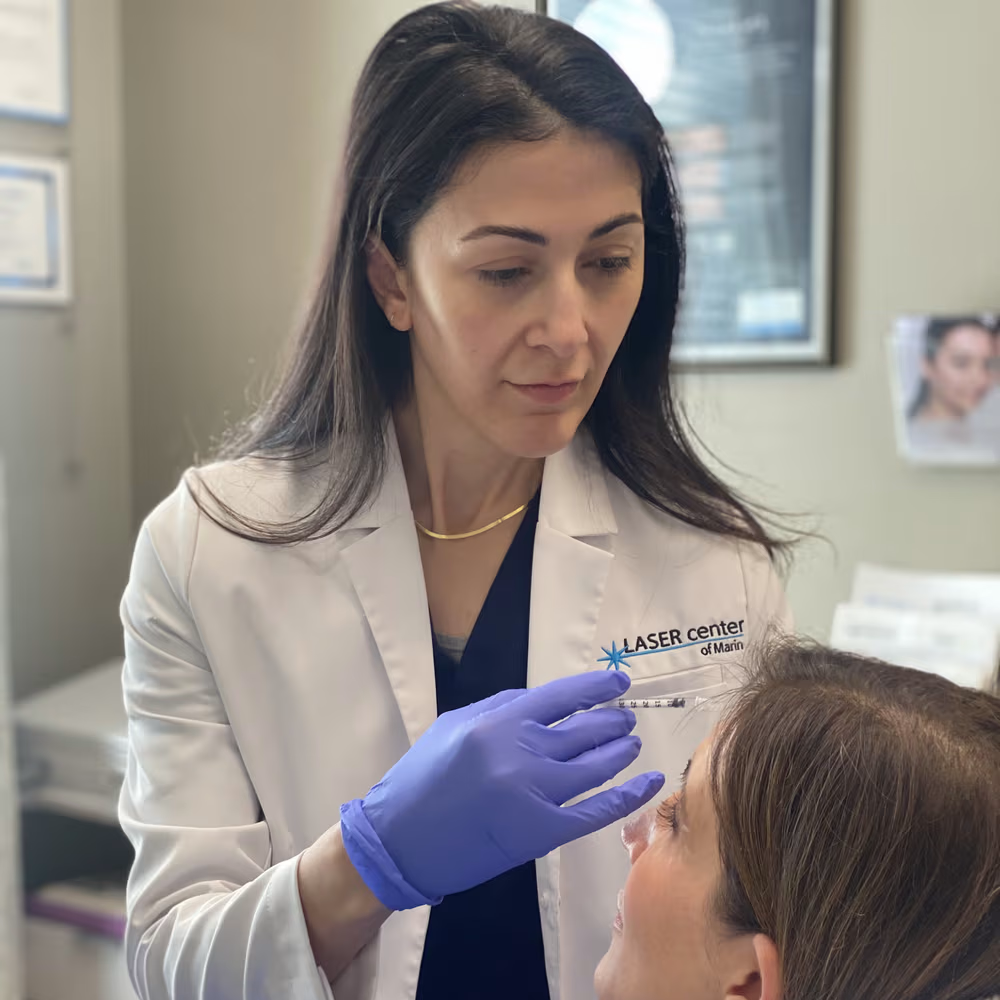
Dermal filler adds hyaluronic acid directly into the area, providing immediate structure. Providers use it for cheeks, jawline, or specific hollowed spots where a patient wants to see change right away. Juvéderm Voluma is a dermal filler formulated for deeper cheek and midface volume specifically, which makes it a common option when hollowing has changed the overall shape of the midface.
Sculptra works differently. The poly-L-lactic acid formula stimulates the body's own collagen production rather than adding volume outright. Results build gradually over a series of sessions rather than appearing immediately, and the effect on the site is described as lasting 2 or more years. Sculptra is often discussed when a patient has broader volume loss across the face and wants a more gradual, collagen-driven approach rather than an immediate fill.
Some patients pair the two approaches directly, using a filler like Voluma for immediate correction in one area while Sculptra builds broader collagen support over time.
At Laser Center of Marin, this evaluation happens under physician-supervised care from a practice that has held Allergan Black Diamond and Galderma Platinum provider status, reflecting experience with injectables including Juvederm and Restylane, alongside Sculptra as part of the practice's broader volume-restoration offering.
Some patients use filler and Sculptra together, addressing immediate hollowing with filler while Sculptra rebuilds collagen support over time. How much volume was lost, and where, determines which combination makes sense.
A consultation for facial hollowing starts with identifying where volume is actually missing rather than assuming every patient needs the same treatment. Cheek hollowing, temple hollowing, and jawline changes don't always respond to the same product or the same amount.
Tell your provider about your recent weight history, including any rapid or significant weight loss, since that context helps explain the pattern being addressed. Also mention any allergies, bleeding disorders, blood thinner use, pregnancy or nursing status, recent dental work, or prior filler complications, since these affect what can be used safely and when.
The goal of treatment is to restore support that's missing, not to add more volume than the face carried before the weight loss. Overcorrection can look as unnatural as the hollowing itself, which is why the amount and placement matter as much as the product chosen.
It describes a real cosmetic pattern: facial fat and volume loss following rapid or significant weight loss, but it isn't a diagnosis specific to any medication. The same hollowing can occur with rapid weight loss from other causes. The term became common because GLP-1 medications made fast, substantial weight loss more common, not because the medications cause a distinct type of facial change.
Not consistently. Some patients see partial improvement in facial fullness if weight is regained, since fat pads can refill somewhat, but many find the hollowing persists even after their weight stabilizes. That's why most look into volume-restoring treatment as its own decision, separate from anything related to their weight.
Filler, including Voluma, adds volume immediately, so the change is visible once any swelling settles. Sculptra works gradually by stimulating your own collagen, so results build over a series of sessions rather than showing up right away. Patients with more significant or broader hollowing sometimes use both, addressing the immediate change with filler while Sculptra builds support over time.
There's no fixed waiting period, but many providers prefer to see that weight has stabilized before finalizing a treatment plan, since ongoing weight change can affect how much volume support the face needs. A consultation can help determine whether your weight and facial change have settled enough to plan treatment.
No. Laser Center of Marin is a physician-supervised aesthetic practice, and this content addresses the cosmetic effect of facial volume loss, not the medications associated with it. Questions about GLP-1 prescriptions, dosing, or weight-loss management should go to the prescribing provider.
If rapid weight loss has left hollowing around your lower face and jawline, Laser Center of Marin can help you figure out whether dermal filler, Voluma, Sculptra, or a combination belongs in your personalized treatment plan. The practice offers physician-supervised care in Corte Madera for patients throughout Marin County and the Bay Area.
Call (415) 945-9875 or schedule online at marinlaser.com/contact.


