The word "permanent" deserves a direct answer before anything else on this page, because if you have been managing rosacea for any length of time, you have probably seen that word attached to treatments that did not deliver it. IPL does not cure rosacea. No treatment currently available does. Rosacea is a chronic inflammatory skin condition with no known cure.
What an IPL series produces is a clinically significant, durable reduction in visible vascular changes: the background redness, the visible broken capillaries, and the flushing frequency that define the condition for most patients. Understanding that distinction is what allows you to plan a realistic treatment program and know what to protect once you have results.
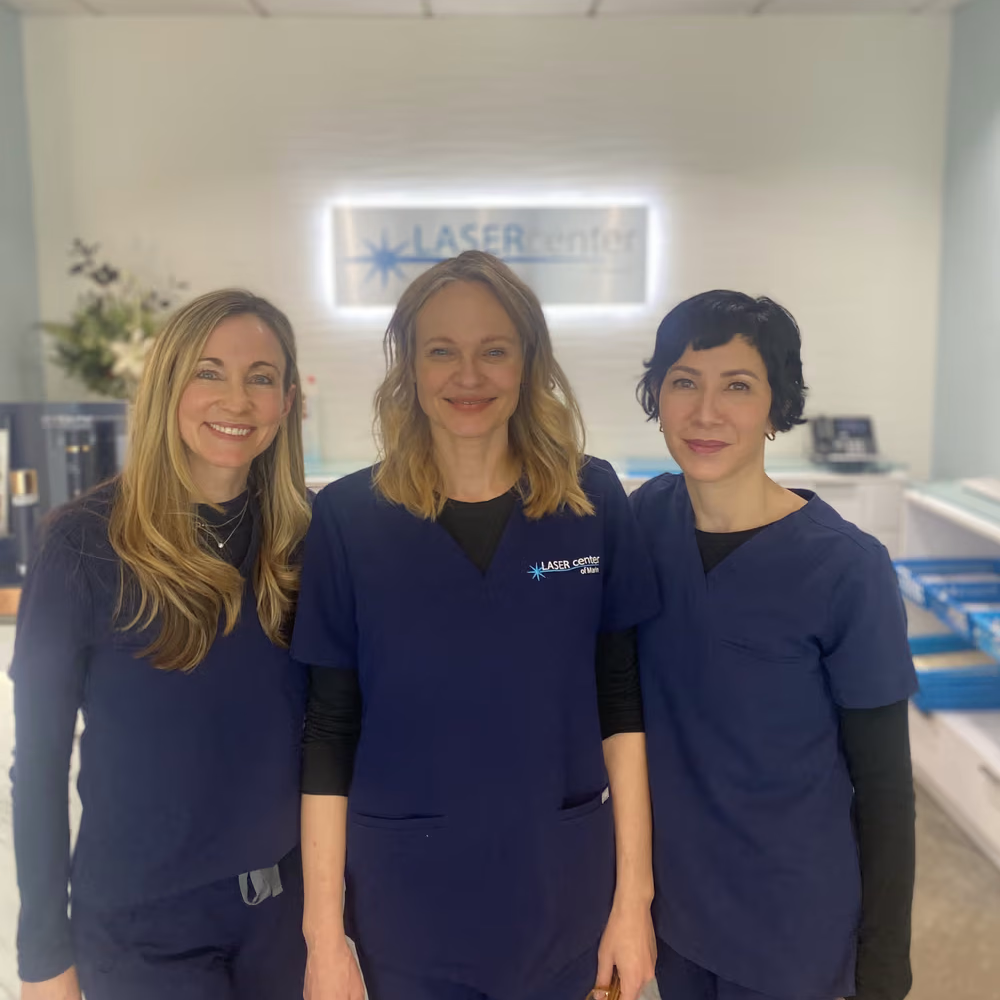
The Laser Center of Marin has provided IPL treatments to Marin County patients managing rosacea since 2003. Our provider team, led by Meghan Dasher, RN, MSN, FNP, approaches rosacea as a chronic condition requiring both active treatment and ongoing management, not a one-time procedure.
Rosacea is a chronic skin condition that causes persistent redness, visible blood vessels, and in some cases, small red bumps across the cheeks, nose, chin, and forehead. It is not acne, though it is frequently mistaken for it.
The condition is driven by an overactive vascular response. Blood vessels near the skin surface dilate more easily and more severely than they do in skin without rosacea. That dilation is what produces the flushing and persistent redness most patients recognize as their primary symptom.
Rosacea does not have a cure. It is a condition that is managed rather than resolved, and for many patients, accepting that distinction is the first step toward actually getting it under control.
The goal of treatment is to reduce the frequency and severity of flares, minimize visible redness and broken capillaries between flares, and slow the progression of the condition over time. IPL addresses the vascular component directly, which is why it is one of the most consistently effective clinical tools for rosacea management.
IPL is most effective for erythematotelangiectatic rosacea and the vascular component of papulopustular rosacea. The National Rosacea Society estimates that 16 million Americans have rosacea, with erythematotelangiectatic rosacea representing the most commonly treated subtype through light-based therapy.
This subtype is characterized by persistent background redness, visible telangiectasias, and episodic flushing. These are vascular findings, and they respond to IPL's light-based mechanism.
IPL is not a treatment for active rosacea papules or pustules. Those involve an inflammatory and sometimes bacterial component that responds better to topical or oral prescription treatments. Patients with papulopustular rosacea often benefit from concurrent medical management alongside an IPL series. Our rosacea concern page covers the full range of how we approach this condition.
Phymatous rosacea, which involves skin thickening and tissue overgrowth, is not treated with IPL.
IPL reduces rosacea redness by coagulating the dilated surface capillaries that produce the persistent erythema characteristic of the condition.
The mechanism is selective photothermolysis. Oxyhemoglobin in the dilated capillaries absorbs the wavelengths emitted by the IPL device. That absorption converts to heat, which damages and coagulates the vessel wall. The body then reabsorbs the treated vessel over one to two weeks. As the treated vessels clear, the background redness they were producing diminishes.
The key limitation is this: IPL removes the vessels that are already there. It does not change the underlying inflammatory tendency of rosacea-prone skin. Rosacea triggers, including UV exposure, heat, alcohol, spicy food, and stress, continue to drive new vessel formation after treatment. This is not a failure of the treatment. It is the nature of the condition. It is also why ongoing sun protection and trigger management are part of the treatment protocol, not optional add-ons.
A completed series of three to five IPL sessions produces a significant, visible reduction in background erythema and the number of visible capillaries, but results require maintenance to sustain.
A 2024 systematic review by Martignago et al., published in the Indian Journal of Dermatology, Venereology and Leprology, found that the majority of reviewed studies demonstrated positive effects of IPL on telangiectasia and erythema in rosacea patients. The improvement is not visible after a single session. Each session treats the vessels present at that point. Most patients see meaningful improvement beginning after the second or third session. The full result of a series is assessed at four weeks after the final appointment.
The background redness fades as the treated vessels are reabsorbed. Visible broken capillaries decrease in number. Many patients also report decreased flushing frequency and intensity, which reflects the reduced vascular reactivity in the treated area.
IPL does not address post-inflammatory hyperpigmentation from prior rosacea flares in the same way it addresses active vessels; that type of pigment change requires a separate assessment. Sun-induced hyperpigmentation is different: IPL treats sun spots and vascular concerns simultaneously, which makes it an efficient option for patients whose rosacea exists alongside separate sun damage.
Rosacea is a condition that generates new vascular changes over time when exposed to its triggers, which means the results of an IPL series degrade without annual maintenance.
The vessels treated in a completed series are permanently removed. The problem is that rosacea-prone skin continues to form new telangiectasias in response to the same triggers that existed before treatment. Without a maintenance session, typically once per year, and without consistent daily sun protection, new vascular changes accumulate in the same zones within 12 to 18 months.
The maintenance requirement is not a sales pitch, and we understand it can feel like an unwelcome answer after completing a full series. It is the clinical reality of managing a chronic condition with a treatment that addresses its visible output rather than its underlying cause. Patients who maintain their results consistently report that the condition remains well-controlled and significantly less visible than before their initial series.
Lifestyle trigger management is a co-treatment for rosacea, not an afterthought. The most common rosacea triggers are UV exposure, heat, alcohol, spicy food, and psychological stress. Each of these can drive a new vascular response in treated tissue.
Daily broad-spectrum SPF 30 or higher is the single most important protective step and applies regardless of the season or whether the patient has sun exposure planned. Consistent SPF after a completed IPL series extends results more than any other single patient behavior.
Trigger identification is individual. Not every patient reacts to every trigger equally. Recognizing personal triggers and managing them reduces the rate of new vessel formation and extends the interval between maintenance sessions.
Several conditions make IPL inappropriate for rosacea treatment or require that treatment be timed carefully.
Active rosacea flare. Treating during an active flare, when erythema, papules, or pustules are at their peak, temporarily worsens surface inflammation. IPL for rosacea is performed during remission. The provider assesses the skin's current state at every appointment.
Fitzpatrick skin types V and VI. Higher baseline melanin density increases the risk of post-inflammatory hyperpigmentation and thermal injury with standard IPL settings. Patients in this range require individualized provider evaluation before treatment. Some are candidates with adjusted protocols. Others are better served by alternative approaches.
Recent tan or significant sun exposure. A tan raises the baseline melanin level across the skin surface, reducing the device's ability to distinguish between the tan and the vascular targets. Two weeks without tanning before each session is standard protocol.
Photosensitizing medications. Certain antibiotics, oral retinoids, and other medications increase sensitivity to light energy. A full medication list must be disclosed at the consultation before any session is scheduled.
Pregnancy. Elective light-based treatments are paused during pregnancy.
The post-treatment window following an IPL session for rosacea requires the same protective measures as IPL for pigmentation, with particular attention to sun protection because the patient is already susceptible to UV-driven vascular flares.
Most patients complete a series of three to five sessions, spaced approximately four weeks apart. The number is not fixed. The provider assesses the rosacea subtype, the density of visible vessels, and the skin's response after each session to determine whether the series is complete.
Some patients see a temporary increase in redness in the 24 to 48 hours following a session, which can feel discouraging when you came in hoping for improvement. This reflects the body's initial inflammatory response to the treatment and resolves on its own. Treating during an active flare substantially increases this response, which is why the timing of each session is assessed carefully.
IPL and prescription rosacea treatments address different aspects of the condition. IPL reduces visible vascular changes. Topical and oral treatments address inflammation and papulopustular activity. Many patients benefit from both. The combination is discussed at the consultation. Some medications, particularly oral retinoids, require a pause before IPL.
No. IPL uses a broad spectrum of wavelengths per pulse and can target both vascular and pigmented concerns simultaneously. A laser uses a single, precise wavelength targeting one specific chromophore. For rosacea, the Genesis laser is a gentle, non-ablative option that also reduces diffuse redness. It is sometimes used as an alternative or complement to IPL, depending on the patient's profile.
The specific vessels treated in a completed series are permanently removed. New vascular changes from ongoing rosacea activity develop over time without maintenance and consistent sun protection. With one annual maintenance session and daily SPF, most patients report sustained control of visible redness and flushing. For a condition that cannot be cured, that level of control is genuinely meaningful.
Rosacea requires a management plan, not a single procedure, and finding the right one takes an honest conversation about what you are actually dealing with. The right approach depends on the subtype of rosacea present, the current state of the skin, and what combination of IPL and ongoing care makes sense for your specific history.
The Laser Center of Marin has provided physician-supervised skin treatments to Marin County patients since 2003. Meghan Dasher and our full provider team assess your rosacea type, photodamage pattern, and treatment history before recommending a protocol.
Visit us at 770 Tamalpais Drive, Suite 301, Corte Madera, CA 94925, book online, or call (415) 945-9314 to schedule.
Medical Disclaimer: Consultation required. Individual results may vary based on rosacea subtype, Fitzpatrick classification, degree of vascular involvement, and number of sessions completed. IPL treats the visible vascular manifestations of rosacea and does not cure the condition. Patients with Fitzpatrick skin types V and VI require individualized provider assessment before treatment. Patients on photosensitizing medications must disclose this at consultation.