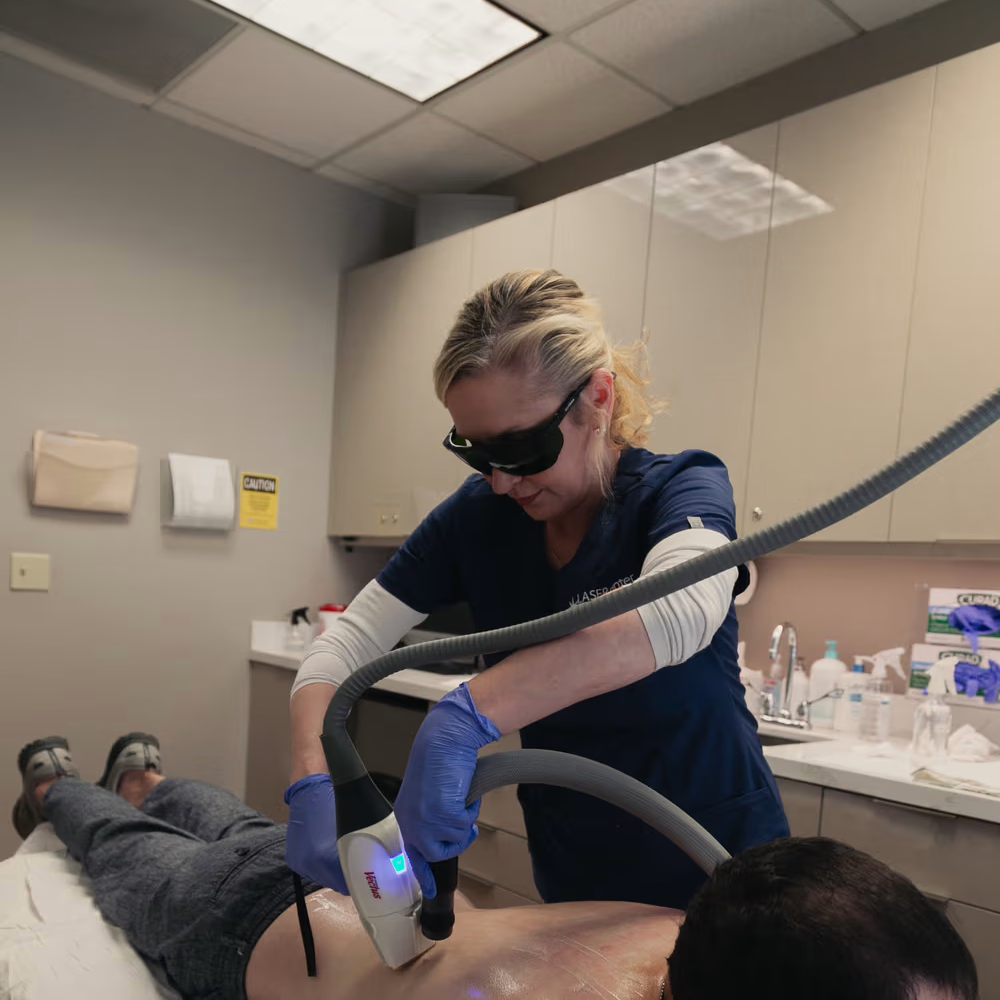
You can still start laser hair removal in July if you follow sun-safety rules. The season is not the problem. Recent tanning, sunburn, and poor aftercare are the real concerns.
For patients dealing with razor bumps, ingrown hairs, or constant shaving before beach weekends, summer can be a practical time to begin a long-term hair reduction plan.
Heat, sweat, sunscreen, saltwater, and fitted clothing add friction, so shaving can irritate the skin. Razor bumps and ingrown hairs often show up along the bikini line, underarms, legs, and thighs.
Laser hair removal targets pigment in the hair follicle. Over a series of sessions, many patients see less hair, finer regrowth, and fewer shaving-related bumps.
Results are not instant, and not every hair is removed permanently. This is a long-term reduction treatment that works gradually.
August can still work for laser hair removal if the treatment area is not tanned, burned, or recently self-tanned. The laser needs a safe contrast between skin and hair, and excess pigment in the skin raises the risk of burns or discoloration. This is why the calendar matters less than your actual sun exposure history for the specific area being treated.
At Laser Center of Marin, laser hair removal is performed in a physician-supervised clinic with experience treating Marin County and Bay Area patients.
Your provider can adjust the plan based on skin tone, hair color, treatment area, and recent sun exposure, and can walk through realistic timing given your summer schedule.
Underarms are usually easier to keep shielded from the sun than legs or bikini areas, which is why timing can vary by treatment area rather than by month. If your legs will be getting regular sun at the beach or on the trail in shorts, the deciding factor is whether you can keep that skin protected between sessions and not the fact that it's summer.
When consistent sun protection on a given area isn't realistic right now, it's worth starting there once you can commit to covering it. Areas like the underarms, which stay covered more easily, can typically move forward right away.
A consultation is the simplest way to sort out which areas are ready now based on your actual sun exposure, rather than the season on the calendar.
Tell your provider about recent tanning, self-tanner, sunburn, antibiotics, acne medication, isotretinoin history, photosensitizing medications, keloid tendency, and herpes outbreaks in the treatment area.
Avoiding tanning and using broad-spectrum SPF before laser hair removal is standard pre-treatment guidance. Your provider may delay treatment if the skin is not ready.
Do not hide sun exposure to keep an appointment. Safe settings depend on accurate information.
Before laser hair removal, you usually shave the area but avoid waxing, plucking, or tweezing. The follicle needs to remain in place for the laser to target it.
Skip harsh exfoliation, retinoids, and irritants on the treatment area unless your provider says otherwise. Arrive with clean skin and no self-tanner.
Blonde, white, gray, and red hair may respond less because there is less pigment for the laser to detect.
After treatment, the skin may look mildly red or swollen, similar to a light sunburn. Your provider may recommend cool compresses, gentle skincare, SPF, and avoiding heat for a short period. Some patients also notice small bumps around each follicle for a day or two, which is a normal part of the skin's response and typically settles on its own.
Skip hot tubs, saunas, hard workouts, and direct sun until cleared, since heat and sweat can aggravate freshly treated skin. Keep the area covered or shaded outdoors, and hold off on fragranced lotions or harsh exfoliants until your provider says it's fine to resume your normal routine. Call the office if you notice blistering, burns, spreading pain, infection-like symptoms, or pigment changes.
Between sessions, continuing sun protection on the treatment area helps preserve your results and keeps you on track for your next appointment without delay.
Waxing pulls hair from the follicle and can give a smooth window, but it can also worsen ingrowns and irritation for some patients.
Yes. The season itself is not the obstacle. Instead, recent tanning, sunburn, and self-tanner on the treatment area are the real concerns. If the area you want treated hasn't been sun-exposed, July can work as well as any other month.
Laser hair removal is a gradual, long-term reduction treatment rather than a one-time fix. Most patients need a series of sessions to see less hair, finer regrowth, and fewer shaving-related bumps, and your provider will map out a schedule based on your hair and skin.
Tell your provider before your appointment. Excess pigment in the skin from tanning, sunburn, or self-tanner raises the risk of burns or discoloration, so your provider may need to adjust settings or delay treatment until the skin is ready.
Yes, you'll typically shave the treatment area beforehand, but avoid waxing, plucking, or tweezing since the follicle needs to stay in place for the laser to target it. Arrive with clean skin and no self-tanner.
If shaving is irritating your skin this summer, Laser Center of Marin can help you decide whether July is still a safe time to start laser hair removal. The right plan depends on your skin, hair, schedule, and sun exposure. For other low-maintenance options this season, consider brow lamination before travel.
Call (415) 945-9875 or schedule online at marinlaser.com/contact.


