Key Takeaways
Marionette lines are the vertical creases that run from the corners of the mouth down toward the chin, named for their resemblance to the hinged jaw of a marionette puppet. The lines develop as a combination of soft-tissue volume loss, downward muscle pull from the depressor anguli oris, and gradual changes in skin elasticity along the lower face.
A well-planned filler treatment addresses all three contributors at once, which is why it tends to be the most effective single intervention for restoring a balanced lower face.
The Laser Center of Marin has served Marin County since 2003, and our Allergan Black Diamond designation places us among the top one hundred dermal filler and Botox providers in the country. Our nurse practitioners run marionette lines filler plans every week, often as part of a fuller lower-face strategy that includes the chin, prejowl sulcus, and the depressor muscles.
This guide walks through the anatomy behind marionette lines, how filler addresses the underlying volume loss, and which products fit which patterns.
The lower face changes in three distinct ways as the face matures:
The combination produces a vertical line, sometimes a shallow groove, and sometimes a deep fold that runs from the corner of the mouth toward the chin.
The line is most visible at rest, deepens during expression, and tends to read as a sad or tired mouth even when the patient feels neither. Many patients describe the lines as the single change in their face they would most want to address.
Hyaluronic acid filler placed in the marionette line area accomplishes two things. The product:
Placement strategy matters as much as product selection. A common pattern places small amounts of filler at the corner of the mouth, along the line of the marionette crease, and into the prejowl sulcus just lateral to the chin.
Each placement contributes a different lift. The corner-of-mouth placement reduces the depressed point. The line placement smooths the crease itself. The prejowl placement supports the chin-jaw transition and prevents the treated area from looking isolated.
The mechanism is not about filling a wrinkle. It is about restoring the underlying volume that the lower face has lost. Treating the line directly without supporting volume in the surrounding zones is a common mistake that produces a result that looks plumped rather than lifted.
The lower face moves a lot, so filler placed in this region needs to withstand constant motion without distorting. Three product categories sit at the top of the marionette-lines menu:
Most marionette line plans use a single product across the treated zones, though some combine two when the line and the surrounding support areas have different depth needs. Your provider will explain the choice during the consultation.
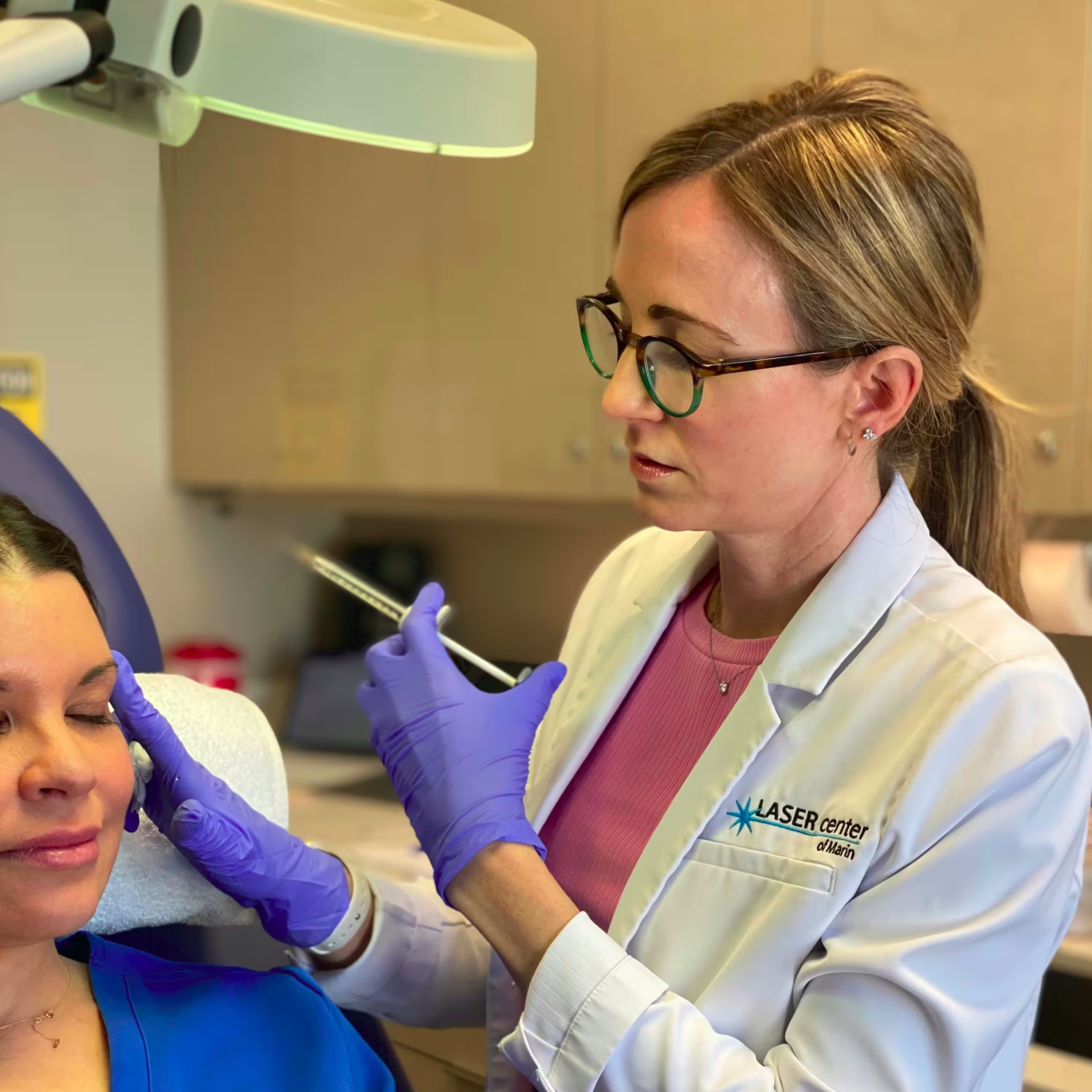
A marionette line filler appointment runs 45 to 60 minutes. Topical numbing is applied first, and the product itself contains lidocaine, so most patients describe the sensation as pressure rather than sharp pain.
The injector typically uses a combination of small needle entries and a blunt-tipped cannula to place product evenly along the line and into the surrounding zones.
The volume per side typically ranges from half to a full syringe, depending on the line depth and the required supporting volume. Most patients use one to two syringes total across both sides.
The result is visible immediately, with the outcome settling across two to four weeks as initial swelling resolves and the product integrates with the tissue. Mild bruising at the injection points and a temporary firmness in the first few days are common and short-lived.
Hyaluronic acid filler in the marionette zone typically lasts nine to fifteen months, with the longer placements at the prejowl sulcus often lasting longer than the lighter placements along the line itself. Annual maintenance is a typical schedule for most patients.
For patients whose marionette lines are driven primarily by an active depressor anguli oris muscle, the combination of filler and a small dose of Botox yields the most consistent and longest-lasting results.
The filler restores the lost volume. Botox softens the downward muscle pull that would otherwise continue to deepen the line.
A typical combination plan uses one to two syringes of filler placed across the corner of the mouth, the line, and the prejowl sulcus, followed by two to four units of Botox per side at the depressor anguli oris.
Botox results begin around day three to five and reach full effect by day ten to fourteen. The filler component lasts nine to fifteen months, and the Botox component is repeated every three to four months as part of regular maintenance. Our nurse practitioners, Meghan Dasher, Lisa Leung, and Kimberly Hanf, customize the dosing during the consultation.
When placed conservatively across the line and supporting zones, the result reads as a softer, more rested lower face rather than an obviously filled one. The risk of an overdone appearance comes primarily from over-treating the line itself without supporting the surrounding volume, which is a planning mistake rather than a property of the product.
Most patients see results lasting nine to fifteen months. The deeper placements at the prejowl sulcus often last longer than the placements along the line itself. Annual maintenance is the typical schedule, with some patients booking a smaller refresh at six to nine months.
Yes. Hyaluronic acid filler can be dissolved by an enzyme called hyaluronidase if the result is not what you wanted. The reversal is performed in the office and takes a few days for the dissolved product to clear.
Filler alone is often enough for patients with mild to moderate lines and average muscle activity. Patients with strong depressor activity, where the corners of the mouth pull noticeably downward at rest, tend to see better and longer-lasting results from a combination treatment.
Skin tightening treatments, biostimulators like Sculptra, and surgical options can each address marionette lines from different angles. Filler is the most direct, immediate, and reversible option, which is why it is the most common starting point for non-surgical treatment.
Marionette lines respond well to a thoughtful, anatomy-driven filler plan, and the difference between a result that looks rested and one that looks treated comes down to how the surrounding zones are addressed.
A consultation with one of our nurse practitioners maps the line, the depressor activity, and the supporting volume, then builds a plan that fits your face rather than a one-size-fits-all template.
The Laser Center of Marin is Marin County's flagship med spa and an Allergan Black Diamond practice, placing us among the top one hundred providers of Botox and Juvederm in the country. We have served the community since 2003 with a physician-supervised approach to every injection.
Visit us at 770 Tamalpais Drive, Suite 301, Corte Madera, CA 94925. You can also call (415) 945-9314 or book your consultation online.