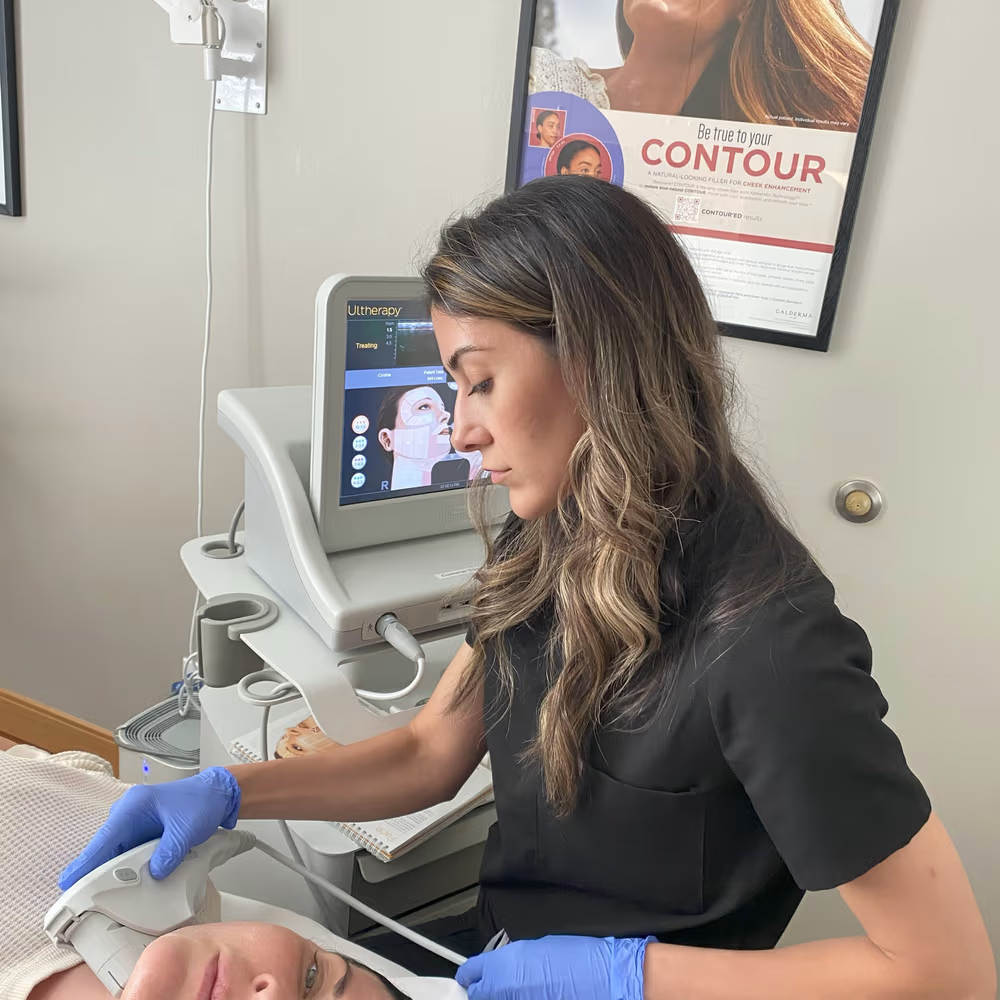
Micropen microneedling therapy is a physician-supervised treatment that uses controlled micro-injury to prompt the skin to rebuild its own collagen and elastin. Patients typically consider it in early fall, after months of sun, saltwater, and pool exposure have left skin looking rougher in texture, with more visible pores and uneven tone.
The treatment addresses surface texture and pore appearance specifically, and does not treat pigment or skin laxity directly.
Summer conditions affect skin texture in more than one way at once. Ultraviolet exposure breaks down collagen and elastin fibers in the deeper layers of skin, the same structural damage that eventually shows up as rougher texture and fine lines. Saltwater and chlorine also strip the skin's surface lipids, and the dehydration that follows can make pores look more prominent by the end of the season.
None of this damage announces itself as a single event. It accumulates across the summer, so by September a patient often notices the combined result: uneven texture, larger-looking pores, and patchy tone, rather than any one specific cause.
Micropen microneedling is a device-based treatment that creates a controlled pattern of micro-injuries in the skin to trigger a wound-healing response. Fine needles pass across the outer layer of skin, and the body interprets that contact as a minor injury, responding by producing new collagen and elastin in a process known clinically as percutaneous collagen induction.
This treatment category has been evaluated in the dermatology literature. A published review of percutaneous collagen induction (PCI) therapy for scars and photoaged skin found generally promising results, while also noting that most available studies are smaller case series rather than large controlled trials (PubMed).
Photoaged skin is the dermatology term for exactly the kind of sun-related texture and tone change a summer of UV exposure leaves behind. That overlap is what positions Micropen as a lower-intervention option for this specific concern.
Micropen microneedling is positioned within Laser Center of Marin's skin rejuvenation category, addressing surface texture, pore appearance, and mild sun-related tone changes. It works on the skin's surface and upper layers, not the deeper structural volume loss that causes sagging. That distinction is why it suits patients whose primary complaint is texture and pore appearance instead of lost volume.
Patients whose main concern after summer is rough texture and enlarged-looking pores, without significant pigment involvement, are typically well suited to Micropen microneedling as a stand-alone option. Where sun exposure has also left noticeable hyperpigmentation, a provider may recommend treating that separately, for example, with an IPL photofacial, since Micropen targets the collagen and texture layer rather than pigment directly.
A stronger tightening effect alongside texture improvement calls for a different comparison. For that goal, Scarlet RF microneedling adds radiofrequency energy to the same micro-injury mechanism for a more intensive result, and a provider can help sort out which option fits a patient's texture, tightening, and downtime priorities during a consultation.
A Micropen session begins with a provider assessing the skin before treatment starts. The provider then passes the device across the treatment area, creating the micro-injuries that begin the collagen-rebuilding process described above.
Right after treatment, skin often looks and feels similar to a mild sunburn. That reaction reflects the controlled micro-injury itself, not a complication. Skin recovering from that injury is also more vulnerable to UV exposure until healing is further along, a general pattern for any micro-injury and not something specific to this device.
Visible texture changes build gradually across a series of sessions instead of appearing after a single visit, since Micropen prompts a rebuilding process rather than an immediate one.
Early fall removes a scheduling conflict that summer creates for a treatment that calls for sun caution while skin heals. Once beach days, pool time, and heavy outdoor sun exposure are behind a patient, it becomes easier to plan around the healing window a Micropen session requires.
Starting in September or October also leaves time to complete a series of sessions before the holiday season's run of events and photos begins. That runway gives a provider room to space sessions appropriately and reassess progress along the way, instead of compressing the whole series into the weeks right before a holiday event.
No. Both create controlled micro-injury to stimulate collagen, but Scarlet RF microneedling adds radiofrequency energy for a stronger tightening effect, while Micropen focuses on surface texture and pore appearance without that added energy component.
Micropen microneedling is built to address texture, pore appearance, and the collagen layer, not pigment directly. Patients with visible sun spots or hyperpigmentation should discuss those concerns separately as part of their treatment plan.
Once regular, intense sun exposure has tapered off and any recent sunburn has fully healed, a provider can assess whether skin is ready to begin. This is a question for a consultation rather than a fixed calendar date, since it depends on individual sun exposure and skin condition.
A physician-supervised consultation is the starting point for a personalized treatment plan that accounts for how this summer specifically affected a patient's skin. Laser Center of Marin has served Marin County since 2003 and can help determine whether Micropen microneedling, on its own or alongside another treatment, fits a patient's texture and tone concerns for fall.
Call (415) 945-9875 or schedule online at marinlaser.com/contact.