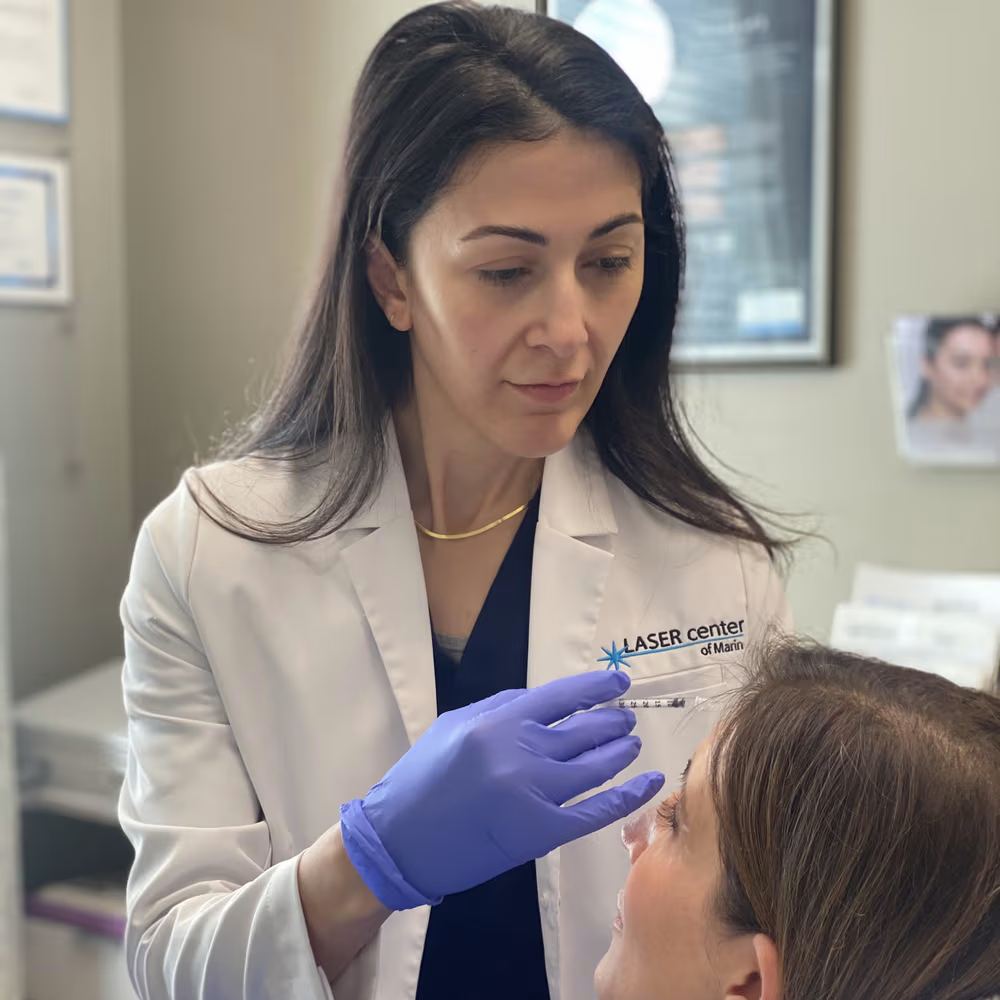
Restoring lost facial volume starts with understanding why your face changes even before deep wrinkles appear. Cheeks may look flatter, under-eyes can appear more shadowed, and the folds around the mouth may seem heavier than they used to.
Dermal filler and collagen-stimulating treatments can help restore facial volume for the right patient. The safest plan starts with anatomy, not a syringe.
Facial volume loss often shows up as hollowing, flattening, or a tired expression. It can affect the cheeks, temples, under-eyes, lips, jawline, and folds around the mouth.
Volume loss happens because fat pads shift, bone support changes, collagen decreases, and skin becomes less elastic. Sun exposure, weight change, genetics, and natural aging can all make the change more visible.
The face can look less lifted because the support under the skin has changed. Adding volume in the wrong place can make the face look heavy, so diagnosis matters.
Volume loss changes facial balance because the face depends on structure. When midface support decreases, the lower face may look heavier. Hollow temples can make the eyes look more tired, and thinning lips can leave the mouth looking less defined.
At Laser Center of Marin, injectables are part of a physician-supervised aesthetic practice that has served Marin County since 2003. The clinic is an Allergan Black Diamond provider and Galderma Platinum provider, which reflects extensive experience with Botox, Juvederm, and Restylane products.
That experience matters because filler selection, placement depth, and amount all affect how natural the outcome looks.
Dermal filler and Sculptra restore volume in different ways.
Dermal fillers, often made with hyaluronic acid, add structure more directly. They may be used for cheeks, lips, chin, jawline, folds, or selected hollow areas. Results are visible quickly, though swelling can take time to settle.
Sculptra is a poly-L-lactic acid injectable that works gradually by stimulating collagen, rather than creating the instant volume effect of hyaluronic acid filler. It is often considered when a patient wants a slower, collagen-supportive approach, and it can also be paired with RF microneedling when texture change is part of the concern.
A good candidate has mild to moderate volume loss and wants a natural-looking change. The goal is to restore support, not overfill the face.
Tell your provider if you are pregnant or nursing, have severe allergies, take blood thinners, have a bleeding disorder, recently had dental work, or have had previous filler complications. Discuss injection-site risks with your provider beforehand, and confirm that whoever administers filler is trained and licensed to do so.
If you have an active infection, inflamed skin, or a rash in the treatment area, filler should usually wait.
Filler cannot fix every sign of aging. It does not tighten loose skin the way an energy-based or surgical treatment can, and it will not remove pigment, erase etched surface lines, or replace a skincare plan.
It also cannot safely correct every hollow area. Under-eye filler, for example, requires careful evaluation because puffiness, fat pads, skin pigmentation, and midface volume loss can all create shadows.
Plan treatment around timing, health history, and your tolerance for temporary swelling or bruising. Many patients schedule filler at least two weeks before travel or major events.
Ask which product is being used, why it fits the area, what risks apply, and how the result can be adjusted if needed. Rare filler risks include vascular compromise, skin injury, infection, nodules, and vision changes. Sudden severe pain, skin color change, or vision symptoms after filler need urgent medical attention.
Volume loss usually shows up as flattening, hollowing, or a tired look in the cheeks, temples, or under-eyes, rather than fine surface lines. Restoring lost facial volume starts with figuring out what you're actually seeing, and that's exactly what a consultation is for. Your provider can look at your anatomy and tell you whether volume, skin quality, or both are driving the change.
Filler adds volume right away. You can see the change the same day, once any swelling settles. Sculptra works more like a slow build: it encourages your own collagen to rebuild over time, so results show up gradually rather than instantly. Neither is "better" across the board. It depends on how much change you want to see and how soon.
The goal with a personalized treatment plan is for you to look like a refreshed version of yourself, not visibly "done." Overfilling or placing volume in the wrong area is what tends to create that noticeable look, which is why diagnosis and placement matter as much as the product itself.
Give yourself some room. Many patients plan filler at least two weeks out so any swelling or bruising has time to fully settle. Sculptra takes even longer to show its full effect since it works gradually, so it's not a same-week fix if you have something coming up soon.
If facial volume loss is changing your expression, Laser Center of Marin can help you understand whether dermal filler, Sculptra, or another treatment belongs in your personalized treatment plan. The clinic offers physician-supervised care in Corte Madera for patients across Marin County and the Bay Area.
Call (415) 945-9875 or schedule online at marinlaser.com/contact.