Treatments for active skin conditions work best when they're matched to what's actually triggering the breakout, and heat or humidity is only one item on a longer list. Stress, hormonal fluctuation, and sweat from regular workouts all push oil production and pore congestion in the same direction, and they do it year-round, not just during a hot stretch.
This piece looks at the most common breakout triggers side by side, then explains where aesthetic, physician-supervised treatments can support the skin once a breakout is already underway. It also draws a clear line around what these treatments do and don't do, since managing an active breakout is different from treating diagnosed acne with medication.
Breakouts rarely come down to one cause. Several everyday factors push oil production and pore congestion up at the same time, and most people are dealing with more than one of them at once.
Heat and humidity. Sebaceous glands respond to heat by producing more oil. That extra oil sits on the skin's surface, mixes with sweat, and combines with sunscreen, makeup, and airborne dirt, then settles into pores throughout the day. In humid air, that mix doesn't evaporate as easily as it does in drier conditions, so it lingers on the skin longer.
Sweat from workouts. This isn't a summer-only factor. A regular workout routine, indoors or out, traps sweat against the skin under a hat, mask, or tight clothing for the length of the session and often longer if makeup isn't removed and skin isn't cleansed soon after. Dermatology calls breakouts from this pattern acne mechanica, since friction and occlusion are driving it as much as oil.
Stress. Elevated stress raises cortisol, and cortisol is linked to increased oil production; sebaceous glands also carry their own stress-hormone receptors, so oil glands can respond somewhat directly to stress, not just through cortisol circulating generally. That's why breakouts often cluster around demanding weeks or periods of poor sleep, independent of the weather or a workout schedule.
Hormonal fluctuation. Hormone shifts tied to the menstrual cycle and other naturally occurring hormonal changes can increase oil production and lead to breakouts that show up on a cycle of their own rather than in response to any single external trigger.
Because these triggers overlap, the same person can be dealing with heat-driven congestion, a stress breakout during a demanding stretch at work, and a hormonal breakout on a monthly cycle, sometimes all within the same month.
Laser Center of Marin offers physician-supervised skincare treatments that support the skin during an active breakout, not medical acne treatment. A dermatologist can prescribe retinoids, oral antibiotics, or isotretinoin for cystic or nodular acne, which are medical decisions that require a diagnosis and prescription. This clinic's skincare menu doesn't replace that path.
What aesthetic treatments for active skin conditions can do is address the surface-level factors that make a breakout worse, whatever combination of triggers caused it: built-up dead skin, clogged pores, and oil that sits too long on the skin.
For patients dealing with occasional congestion or mild breakouts tied to heat, workouts, stress, or a hormonal cycle, that's a meaningful gap to close. For patients with painful, deep, or spreading acne, the right next step is a dermatology referral.
A chemical peel removes the outer layer of dead skin cells that traps oil, sweat, and bacteria at the surface. By clearing that layer, a peel gives clogged pores a more direct path to drain instead of staying blocked under a buildup of skin cells.
A peel clears that buildup the same way no matter what caused it to accumulate in the first place. A tailored treatment plan determines peel strength and frequency based on skin type and how actively the skin is breaking out, since a stronger peel isn't automatically the better choice for irritated or actively inflamed skin.
DiamondGlow uses a diamond-tip wand to exfoliate the skin's surface while vacuuming out the oil and debris sitting in the pores, then infuses a serum matched to the patient's concern. That extraction step separates DiamondGlow from a standard facial: rather than just removing dead skin, it also draws out what's already clogging the pore.
For skin that's congested rather than actively inflamed, DiamondGlow can clear that buildup in a single session, whether the congestion built up from a hot week, a heavier workout schedule, or a stressful stretch. Patients with active breakouts, sensitive skin, or recent injectables should have their skin evaluated by a provider first, since not every skin condition tolerates extraction and vacuum suction the same way.
An in-office treatment clears congestion at a single point in time. Medical-grade skincare keeps pores from re-clogging in the days and weeks after, since whatever triggered the breakout in the first place is usually still at work.
A provider can recommend cleansers, exfoliants, and other products formulated to manage oil and support the skin's barrier without over-drying it, which is a common problem with over-the-counter acne products used too aggressively.
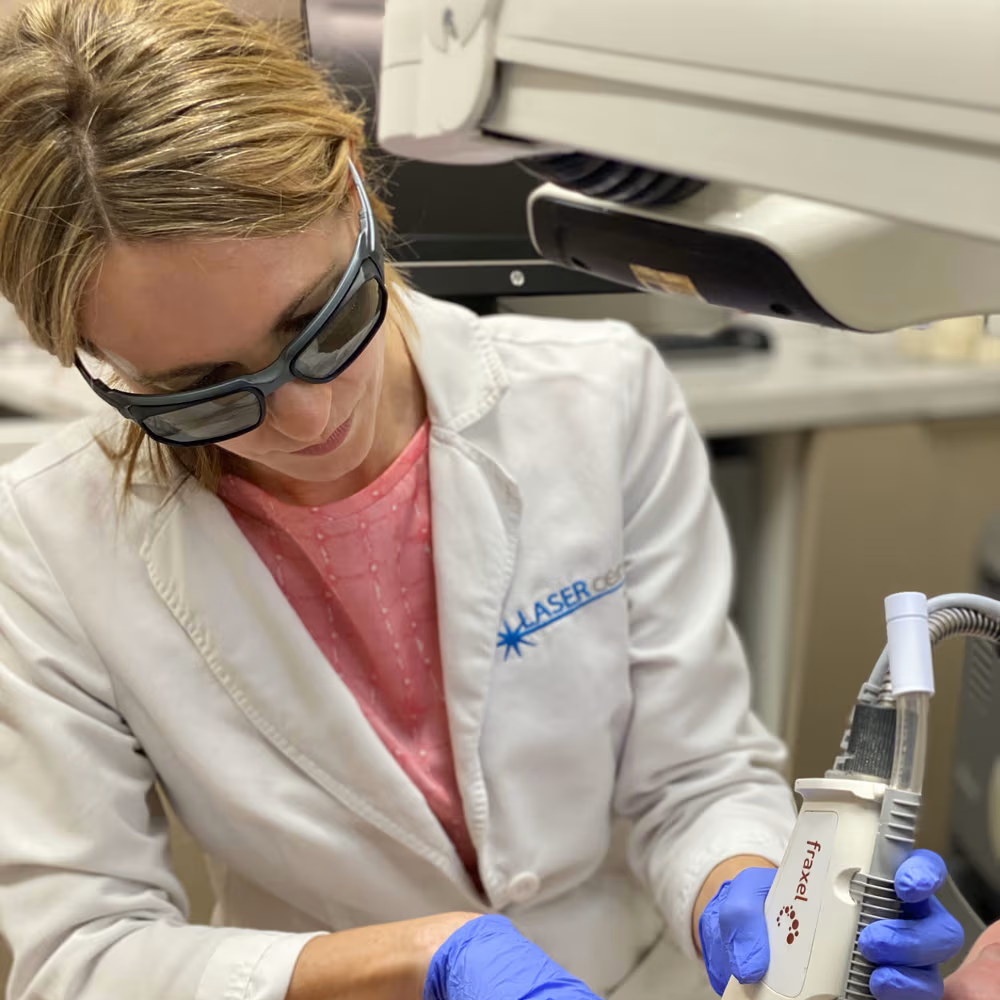
Clear + Brilliant is a fractional laser treatment aimed at skin texture, tone, and the marks that linger after a breakout has cleared, not at active inflammation itself. It works by creating controlled, microscopic treatment zones in the skin's surface, which prompts the skin to renew itself and can improve the appearance of post-breakout discoloration and rough texture over time.
This treatment is a better fit once the active breakout has settled and the concern has shifted to what it left behind. Treating over-inflamed or actively broken-out skin isn't the intended use, which is why a provider evaluates where the skin is in that cycle before recommending it.
Occasional congestion from heat, sweat, stress, or hormonal fluctuation is different from acne that's painful, cystic, spreading, or not responding to a consistent skincare routine. That kind of acne often needs a prescription-level treatment plan, which falls outside what a physician-supervised aesthetic clinic provides.
If your skin is inflamed, tender to the touch, or leaving deeper marks than usual, a dermatologist can evaluate whether a topical or oral medication is the right next step before you pursue any in-office skincare treatment.
No. These are aesthetic and medical-grade skincare treatments aimed at surface congestion, oil buildup, and texture, not diagnosed acne conditions like cystic or nodular breakouts. Cystic acne typically needs a dermatologist's evaluation and, in many cases, a prescription treatment plan.
It depends on how active and how deep the breakout is. Mild congestion often tolerates a chemical peel or DiamondGlow well. Inflamed, painful, or widespread breakouts usually need a provider's evaluation first, since extraction and exfoliation aren't appropriate for every stage of a breakout.
Yes. Stress and hormonal fluctuation can raise oil production independent of temperature or humidity, which is why some patients notice breakouts clustering around demanding weeks or a monthly cycle even when the weather isn't a factor.
Frequency depends on skin type, peel strength, and how quickly the skin recongests. A provider sets frequency as part of a tailored treatment plan rather than a fixed schedule that applies to every patient.
Clear + Brilliant is suited to texture and discoloration left behind after a breakout has resolved, which includes marks from past acne. It isn't intended for active, inflamed breakouts, so the timing of treatment matters.
Yes. A provider needs to see the skin in person to determine whether the concern is surface congestion, active inflammation, or leftover texture, since each of those calls for a different treatment or a different referral.
If breakouts are hard to manage, whether the trigger is heat, a workout routine, stress, or a hormonal cycle, Laser Center of Marin can evaluate your skin and recommend which combination of chemical peel, DiamondGlow, medical-grade skincare, or Clear + Brilliant fits what's actually happening.
The clinic provides physician-supervised care in Corte Madera for Marin County and Bay Area patients, and can also point you toward a dermatologist if what you're dealing with falls outside aesthetic skincare.
Call (415) 945-9875 or schedule online at marinlaser.com/contact.


